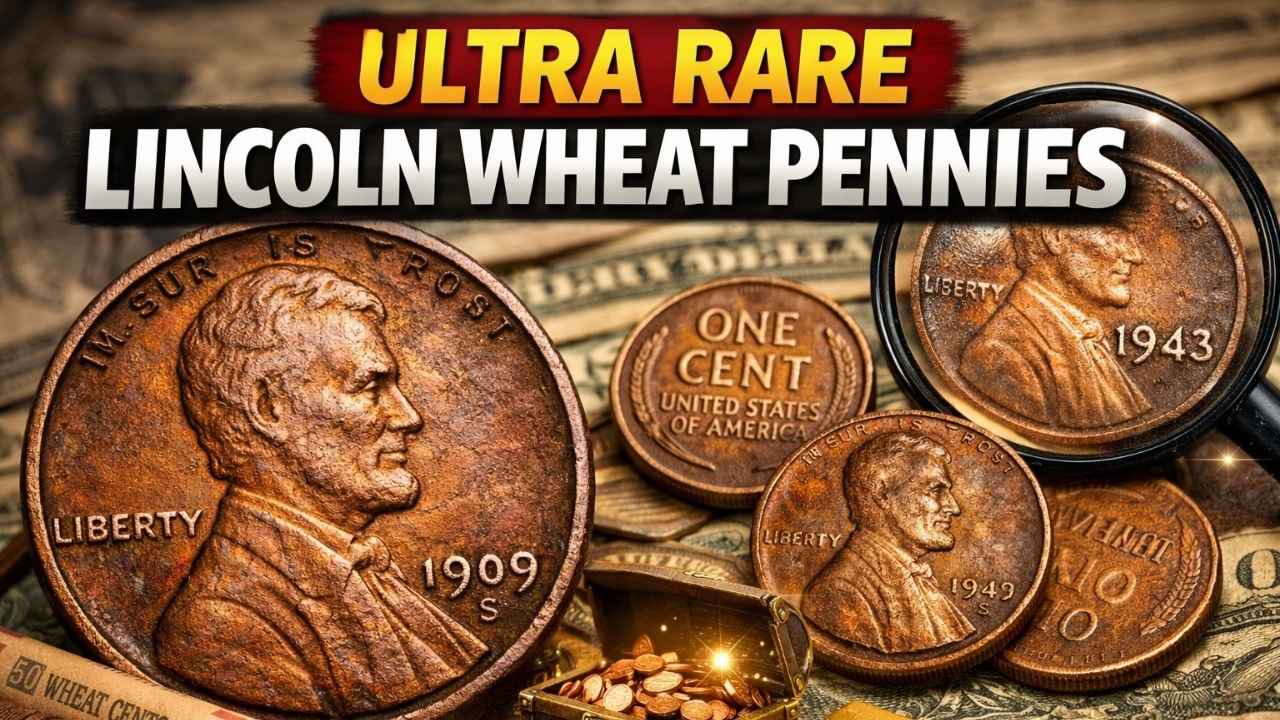
Ultra Rare Lincoln Wheat Pennies: Lincoln Wheat Pennies are among the most iconic coins in American history. Minted from 1909 to 1958, these small copper coins often appear ordinary at first glance. However, beneath their simple design lies a fascinating world of rare errors and unique variations that can transform a one-cent coin into a collector’s dream worth hundreds or even thousands of dollars.
For many collectors, the thrill is not just in owning old coins but in discovering rare minting mistakes that make certain pennies exceptionally valuable. These errors occurred during the production process at the U.S. Mint and were often released into circulation unnoticed. Today, these rare finds are highly sought after.

Understanding the most important error types can help both beginners and experienced collectors identify valuable pieces in their collections.
Doubled Die Errors and Why They Matter
One of the most famous and valuable error types in Lincoln Wheat Pennies is the doubled die. This error occurs when the coin die receives multiple impressions at slightly different angles during its creation. The result is a noticeable doubling effect on the coin’s design.

Collectors typically look for doubling in the date, lettering, or Lincoln’s profile. The most well-known example is the 1955 doubled die penny, where the date and inscriptions appear clearly duplicated. This dramatic visual effect makes it easy to spot, even for beginners.
Coins with strong doubled die errors are extremely valuable because they are both rare and visually striking. Even minor doubling can significantly increase a coin’s worth, depending on its clarity and condition.

Off-Center Strikes and Their Unique Appeal
Off-center strike errors occur when the coin blank is not properly aligned with the die during striking. This results in a portion of the design missing, while the rest appears shifted to one side.
The value of an off-center penny depends largely on how much of the design is missing. Coins that are about 10 to 50 percent off-center tend to be the most desirable, especially if the date is still visible. If the date is missing entirely, the coin may lose some of its collectible value.

These coins are visually unusual, making them attractive to collectors who enjoy coins that stand out from the norm. Each off-center strike is unique, adding to its appeal.
Broadstrike Errors and Their Distinct Look
Broadstrike errors happen when a coin is struck without the retaining collar that normally keeps it in shape. As a result, the coin expands outward, creating a wider and flatter appearance than usual.

Unlike off-center strikes, broadstruck coins typically retain the full design but lack the defined rim seen on regular coins. This gives them a smooth, spread-out look that is easy to recognize.
Collectors value broadstrike pennies because they clearly demonstrate a flaw in the minting process. The more dramatic the expansion, the higher the potential value.

Clipped Planchet Errors and Missing Metal
Clipped planchet errors occur before the coin is even struck. During the blanking process, the metal sheet sometimes overlaps incorrectly, causing a portion of the coin to be missing when it is cut.
This results in a coin with a curved or straight հատված missing from its edge. These missing sections are smooth and appear as though a piece has been cleanly cut out.
Clipped planchets are popular among collectors because they are easy to identify and come in various shapes and sizes. The size and position of the clip can influence the coin’s value, with larger and more unusual clips often commanding higher prices.
Die Cracks and Cuds as Signs of Wear
Die cracks and cuds are errors caused by damage to the coin die itself. Over time, dies can develop cracks due to repeated use under high pressure. When a cracked die strikes a coin, it leaves raised lines or blobs on the surface.

A die crack appears as a thin raised line, while a cud is a larger raised area caused by a piece of the die breaking off. These errors may not seem dramatic at first, but they are highly collectible, especially when they are large or located in prominent areas.
Coins with significant die damage tell a story about the minting process and the wear and tear experienced by the equipment.

Repunched Mint Marks and Subtle Variations
Before modern minting technology, mint marks were punched onto coins by hand. This sometimes led to repunched mint marks, where the mark was stamped more than once in slightly different positions.
These errors can be difficult to spot, requiring careful examination with magnification. Collectors often look for overlapping letters or slight shadows around the mint mark.

Although subtle, repunched mint marks are highly valued by specialists who appreciate the fine details and historical context behind these coins.
Wrong Planchet Errors and Rare Surprises
Wrong planchet errors occur when a coin is struck on a blank intended for a different denomination or even a different metal. This can result in a penny being struck on a dime or foreign coin blank.
These coins often have unusual colors, weights, or sizes compared to standard Lincoln Wheat Pennies. Because they are extremely rare, wrong planchet errors can be among the most valuable finds.
Collectors prize these coins for their uniqueness and the fascinating mistake that led to their creation.
How Condition Affects Error Coin Value
While errors play a major role in determining a coin’s value, condition is equally important. Coins in better condition, with minimal wear and clear details, are always more desirable.
Even a rare error can lose value if the coin is heavily damaged or worn. Collectors often use grading systems to assess condition, ranging from poor to mint state.
Combining a rare error type with excellent condition can significantly increase a coin’s market price.
Tips for Identifying Valuable Wheat Penny Errors
Finding valuable error coins requires patience and attention to detail. Collectors should examine coins under good lighting and use magnification to spot subtle features.
Sorting coins by date and mint mark can also help narrow down potential finds. Keeping a reference guide or comparing with known examples can improve accuracy.
It is also important to handle coins carefully and store them properly to preserve their condition. Even small scratches or damage can reduce their value.
Conclusion: Turning Ordinary Pennies into Extraordinary Finds
Lincoln Wheat Pennies may seem common, but hidden among them are rare treasures waiting to be discovered. Error coins offer a unique glimpse into the minting process and provide collectors with exciting opportunities to find valuable pieces.
By learning about doubled dies, off-center strikes, broadstrikes, clipped planchets, die cracks, repunched mint marks, and wrong planchet errors, collectors can sharpen their skills and increase their chances of success.
Whether you are a beginner or an experienced collector, the world of Wheat Penny errors is full of surprises. With careful observation and a bit of luck, even a simple penny can become a remarkable and valuable addition to your collection.